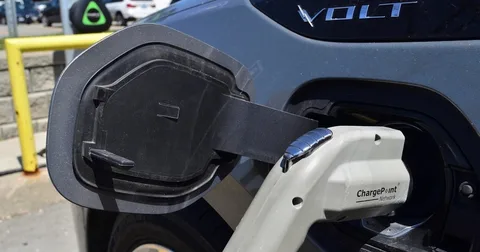
In FY2026 (Reiwa 8), Nagano Prefecture launched a new vehicle subsidy for EVs. But it comes with a unique condition: being paired with solar power is the basic premise. Homes that already have solar panels can get up to 250,000 yen for an EV alone, installing solar and an EV together pays 300,000 yen, and adding a storage battery and V2H stacks up to a maximum of 650,000 yen — the "Roof Solar Connected to Your Car" subsidy (Kuruma to Tsunagu Yane Solar Hojokin). Municipal top-ups such as Komoro City's 100,000 yen also exist, and it can be triple-stacked with the national CEV subsidy (up to 1.3 million yen for EVs). Here is how the combinations work.
Think of Nagano's EV subsidies as a three-tier structure
CEV subsidy (the main pillar)
A national subsidy available to both individuals and corporations. The FY2025 supplementary-budget round (registrations from April 2026) offers the largest amounts, such as up to 1.3 million yen for EVs.
Solar-package type, up to 650,000 yen
The "Roof Solar Connected to Your Car" subsidy, newly created in Reiwa 8. From 250,000 yen for an EV alone (existing solar) up to a maximum of 650,000 yen in combination.
Top-ups such as Komoro City's 100,000 yen
Komoro City offers up to 100,000 yen (budget for roughly 10 vehicles). There is also information on up to 200,000 yen in Saku City (confirm on the city's official site).
[National] CEV Subsidy under the FY2025 Supplementary Budget (registrations from April 2026; the main pillar)
"Up to 1.3 million yen" is a cap. The subsidy amount is set for each model based on ratings such as the vehicle's environmental performance. Applications close once the budget runs out. On September 4 the secretariat announced that it expects to stop accepting applications around early to late December 2026 (applications are taken in order of arrival, and intake ends the day before the budget is reached; secretariat notice, PDF, in Japanese). A subsidized vehicle carries a mandatory holding period of four years in principle — selling it within that period may require repaying the subsidy. Check the exact amount for the car you plan to buy in the figures published by the Next Generation Vehicle Promotion Center.
For the full picture of the CEV subsidy and the situation nationwide, see our guide to EV subsidies in all 47 prefectures.
[Nagano Prefecture] The new "Roof Solar Connected to Your Car" subsidy — solar plus EV pays up to 650,000 yen
The subsidy Nagano Prefecture created in Reiwa 8 is a package type premised on "using solar-generated electricity in your EV". The amounts are roughly as follows.
| Combination | Cap |
|---|---|
| EV/PHEV alone (home already has solar) | 250,000 yen |
| Solar and EV installed together | 300,000 yen |
| Combined with storage battery, V2H, etc. | Up to 650,000 yen |
The core requirements: the home must be an existing house in the prefecture, the installation must go through a "Shinshu Roof Solar certified contractor", and there must be a plan to use the solar electricity in the EV. Leases qualify as well as purchases. Since the prefecture has no plain EV purchase subsidy untied to solar, the dividing line is whether your roof has (or will get) solar panels. Applications opened on April 22, 2026.
[Municipalities] Komoro City up to 100,000 yen; confirm Saku City
| City | Status in FY2026 |
|---|---|
| Komoro City | Accepting applications: up to 100,000 yen for new BEVs and FCVs (one vehicle per household). Individuals living in the city; purchase from a business in the city or an authorized dealer. First come, first served with a budget of 1 million yen — roughly 10 vehicles |
| Saku City | Information about a purchase subsidy of up to 200,000 yen appears on the prefecture's page. Confirm details on the city's official site |
| Nagano City / Matsumoto City | No vehicle purchase subsidy for individuals could be confirmed |
If your home already has solar, you can aim for the triple stack of "national CEV + prefectural 250,000 yen + municipal". Because of the prefecture's certified-contractor requirement, confirm at the quotation stage that the contractor holds the certification.
Also check EV "taxes" (automobile tax reductions)
Separately from subsidies, the environmental performance levy of the automobile tax was abolished on March 31, 2026, and it is not charged on vehicles acquired on or after April 1, 2026 (Tokyo Metropolitan Government Bureau of Taxation, in Japanese). For EVs, the following year's automobile tax (by-type levy) is reduced by roughly 75% under the green taxation special measure. For details, see EV taxes and the 2026 automobile tax reform.
Is the subsidy itself taxed?
EV subsidies received by individuals are treated as occasional income (ichiji shotoku). Because a special deduction of 500,000 yen per year applies, no tax arises as long as your occasional income for the year, combined with any other occasional income, is 500,000 yen or less. National and local subsidies combined usually stay within this, but be careful about the total in a year when you receive several large subsidies. Business use is treated differently, so consult a tax accountant or similar professional.
What to do today
What to do today
- Check the national CEV subsidy amount for your candidate models in the Next Generation Vehicle Promotion Center's list (the amount for your specific car, not the "up to 1.3 million yen" cap)
- Search your municipality's official website for its EV subsidy; in Nagano the prefecture requires a certified contractor, so check who will quote your installation along with remaining budgets and application status
- Work backward from your delivery date to build an application schedule (confirm three things: registration date, application deadline, and budget exhaustion)
FAQ
Q. Can a home without solar panels get the prefectural EV subsidy?
A. The prefecture has no plain EV purchase subsidy. If you install solar at the same time you can qualify for the 300,000 yen cap, so the program is designed for considering the rooftop option together. Without solar, the national CEV subsidy and municipal subsidies are your main options.
Q. How do I get the maximum 650,000 yen?
A. That is the cap when you install a combination such as solar, an EV, a storage battery, and V2H. Check the caps and requirements for each combination on the prefecture's official page and request a quote from a certified contractor.
Q. Do leases qualify?
A. The prefectural program covers both purchases and leases. Municipal programs differ (Komoro City assumes a purchase), so check each set of guidelines.
Q. I live in Nagano City or Matsumoto City. Is there a city subsidy?
A. As of August 2026, no vehicle purchase subsidy for individuals could be confirmed in either city. The prefecture's solar-package subsidy (residents anywhere in the prefecture qualify) and the national CEV subsidy are your main options.
Reference links (sources)
Note: Subsidy amounts, requirements, and application status are as of August 2026. Programs may close early depending on budget consumption. Always check the latest information on each official website before applying.