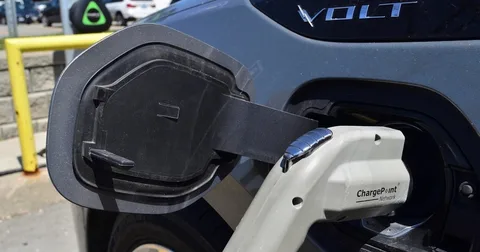
Subsidies for buying an electric vehicle (EV) are made up of three layers: national, prefectural, and municipal. Of these, the national CEV subsidy is common nationwide, offering up to ¥1.3 million for an EV. On the other hand, the additional subsidies that prefectures and municipalities add on top vary enormously by region — some areas, like Tokyo, are very generous, while other areas have no purchase subsidy of their own and rely mainly on national plus municipal support. This article organizes, in a neutral way, the ideas common to all 47 prefectures, how the amount is determined (with the generous Tokyo case as an example), common conditions, how to look up the subsidy in your own area, and even the tax on a subsidy you receive.
(1) The national CEV subsidy is common to all 47 prefectures. Up to ¥1.3 million for an EV, up to ¥580,000 for a mini EV, and up to ¥850,000 for a PHEV (FY2025 supplementary budget / FY2026)[METI (in Japanese)].
(2) Prefectural and municipal top-ups vary greatly by region and change every fiscal year with the budget. How much you get depends on where you live.
(3) National and local subsidies can be combined (in some cases prefectural and municipal subsidies can be stacked too).
(4) A leading example of generous support is Tokyo (national plus metropolitan adds up to a large amount; see the Tokyo EV subsidy guide).
(5) A subsidy received for a personal car is occasional income. If the national plus local total exceeds the ¥500,000 special deduction, a tax return may be required[National Tax Agency].
The EV subsidy has a three-layer structure of "national plus local"
An EV purchase subsidy is made up of overlapping schemes run by different bodies. Separating these three layers first makes it easier to work out how much you can receive.
| Layer | Run by | Content |
|---|---|---|
| National (CEV subsidy) | METI / Next Generation Vehicle Promotion Center | Common nationwide. Up to ¥1.3 million for an EV, etc. The amount is set individually by model |
| Prefecture | Each prefecture | Some prefectures add their own top-up; others have no purchase subsidy. Tokyo stands out |
| Municipality | Each municipality | Some municipalities add a top-up of tens of thousands to several hundred thousand yen. Ordinance-designated cities and large cities tend to be generous |
Because national and local subsidies are separate schemes, they can be combined, and in some areas you can receive from both the prefecture and the municipality. However, the local portion has a limited budget and applications may close partway through the fiscal year.
The national CEV subsidy (common nationwide, up to ¥1.3 million)
On 4 September 2026, responding to a rise in enquiries, the Next Generation Vehicle Promotion Center published its forecast for when applications for the national CEV subsidy (vehicles) will close. The expected closing period is early December to late December 2026. The forecast may move depending on the volume of applications and will be updated as the budget is drawn down[Next Generation Vehicle Promotion Center].
Note how the deadline is counted. Applications are taken in order of the date the form reaches the secretariat — not the date the vehicle is registered or the contract signed. And once the budget is reached, applications close on the day before the budget is exhausted. It can therefore close earlier than forecast, so "as long as delivery happens by December" is not a safe assumption.
If you are considering a purchase, work back from delivery and the arrival date of the form, and aim to be ready to apply during November. Always check the Center's official site for the current status.
The national "Clean Energy Vehicle Introduction Promotion Subsidy (CEV subsidy)" is a common subsidy that qualifies wherever in the 47 prefectures you buy. From 2026 (the FY2025 supplementary budget), the cap for EVs was raised[METI (in Japanese)].
| Vehicle category | Subsidy cap |
|---|---|
| EV (standard / compact) | Up to ¥1.3 million |
| Mini EV | Up to ¥580,000 |
| PHEV (plug-in hybrid) | Up to ¥850,000 |
| FCV (fuel cell vehicle) | Said to be up to ¥2.55 million (confirm the latest amount) |
- The cap is a "maximum," and the actual subsidy is set individually based on the model, its performance, and an assessment of the manufacturer's efforts. Not every model receives the cap amount.
- For high-priced vehicles of ¥8.4 million or more (excluding tax), the subsidy is adjusted to 0.8 times.
- The contact point is the Next Generation Vehicle Promotion Center. Applications for the FY2025 supplementary budget opened on March 31, 2026. Eligible models and the confirmed amounts can be checked on the Center's official site.
The "own subsidies" of the 47 prefectures vary greatly by region
Prefectural and municipal top-ups change in amount, and in whether they exist at all, every fiscal year, and cannot be shown as confirmed amounts in a single nationwide table (there is no unified public list either; each local government publishes separately). What is certain is that "the national maximum of ¥1.3 million is common to all 47 prefectures"; for the top-up portion, use the checkpoints in the table below as a guide and confirm on each local government's official site.
| Prefecture | Situation at the prefectural level (the national maximum of ¥1.3 million is common to all 47 prefectures) |
|---|---|
| Hokkaido / Tohoku | |
| Hokkaido | No prefectural EV purchase subsidy of its own. National plus municipal (Sapporo City, etc.) |
| Aomori | No prefectural EV purchase subsidy of its own (the prefecture covers charging equipment). National plus municipal |
| Iwate | The prefecture offers only an EV-introduction subsidy for businesses. Individuals: national plus municipal |
| Miyagi | The prefecture covers only business-premises and freight-business use. Individuals: national plus municipal (Sendai City, etc.) |
| Akita | No prefectural EV purchase subsidy of its own. National plus municipal |
| Yamagata | No prefectural EV purchase subsidy of its own. National plus municipal |
| Fukushima | The prefecture offers only an FCV (fuel cell vehicle) subsidy. For EVs, national plus municipal |
| Kanto | |
| Ibaraki | No prefectural EV purchase subsidy of its own. National plus municipal |
| Tochigi | The prefecture offers ZEV (EV/FCV/PHV) and FCV subsidies for businesses. For a personal car, national plus municipal |
| Gunma | No prefectural EV purchase subsidy of its own. National plus municipal |
| Saitama | No prefectural purchase subsidy planned for FY2026. Check via national plus municipal (Saitama City, etc.) |
| Chiba | The prefecture covers only business use (regional transport: buses, taxis, trucks, etc.). Individuals: national plus municipal (Chiba City, etc.) |
| Tokyo | The metropolitan purchase subsidy stands out nationwide. Generous with national plus metropolitan (dedicated article). Also check ward/city top-ups |
| Kanagawa | The prefectural purchase subsidy is centered on business EVs, so individuals are not covered. Individuals: national plus municipal (dedicated guide) |
| Chubu | |
| Niigata | No prefectural EV purchase subsidy of its own. National plus municipal (Niigata City, etc.) |
| Toyama | Has its own prefectural purchase subsidy (EV Introduction Support Project subsidy; individuals/corporations). Confirm FY2026 acceptance and amount on the prefectural official site |
| Ishikawa | Has its own prefectural purchase subsidy (EV/PHV ¥150,000, etc.; renewable-energy condition) → dedicated guide |
| Fukui | Has its own prefectural purchase subsidy (EV ¥100,000; youth discount ¥400,000, etc.) → dedicated guide |
| Yamanashi | No prefectural EV purchase subsidy of its own (the prefecture covers charging and hydrogen). National plus municipal |
| Nagano | No prefectural EV purchase subsidy of its own (the prefecture covers charging). National plus municipal |
| Gifu | No prefectural EV purchase subsidy of its own. National plus municipal |
| Shizuoka | No prefectural EV purchase subsidy of its own. National plus municipal (Shizuoka City, Hamamatsu City, etc.) |
| Aichi | No prefectural EV purchase subsidy of its own. National plus municipal (Nagoya City, etc.) |
| Kinki | |
| Mie | No prefectural EV purchase subsidy of its own. National plus municipal |
| Shiga | Has its own prefectural purchase subsidy (individuals also eligible; Next Generation Vehicle Diffusion Promotion Project). Confirm the latest amount on the prefectural official site |
| Kyoto | No prefectural EV purchase subsidy of its own (the prefecture covers hydrogen). National plus municipal (Kyoto City, etc.) |
| Osaka | The prefecture offers only ZEV for small and medium businesses. Individuals: national plus municipal (Osaka City, Sakai City, etc.) |
| Hyogo | The prefecture covers businesses only. Individuals: national plus municipal (Kobe City, etc.) |
| Nara | No prefectural EV purchase subsidy of its own. National plus municipal |
| Wakayama | No prefectural EV purchase subsidy of its own. National plus municipal |
| Chugoku | |
| Tottori | No prefectural EV purchase subsidy of its own. National plus municipal |
| Shimane | No prefectural EV purchase subsidy of its own. National plus municipal |
| Okayama | The prefecture covers only charging equipment. Purchase subsidy: city (Okayama City, etc.) plus national |
| Hiroshima | No prefectural EV purchase subsidy of its own. National plus municipal (Hiroshima City, etc.) |
| Yamaguchi | The prefecture offers only an FCV (fuel cell vehicle) subsidy. For EVs, national plus municipal |
| Shikoku | |
| Tokushima | No prefectural EV purchase subsidy of its own. National plus municipal |
| Kagawa | No prefectural EV purchase subsidy of its own. National plus municipal |
| Ehime | No prefectural EV purchase subsidy of its own (the prefecture covers charging). National plus municipal |
| Kochi | No prefectural EV purchase subsidy of its own. National plus municipal |
| Kyushu / Okinawa | |
| Fukuoka | No prefectural EV purchase subsidy of its own (the prefecture covers fuel costs for FC commercial vehicles, etc.; businesses). Individuals: national plus municipal (Fukuoka City, Kitakyushu City, etc.) |
| Saga | No prefectural EV purchase subsidy of its own. National plus municipal |
| Nagasaki | No prefectural EV purchase subsidy of its own. National plus municipal |
| Kumamoto | No prefectural EV purchase subsidy of its own. National plus municipal (Kumamoto City, etc.) |
| Oita | The prefecture offers only FCV (fuel cell vehicle) purchase support. For EVs, national plus municipal |
| Miyazaki | No prefectural EV purchase subsidy of its own. National plus municipal |
| Kagoshima | The prefecture offers only an EV subsidy for remote islands. On the mainland, national plus municipal |
| Okinawa | The prefecture offers an EV subsidy for remote islands and depopulated areas. Elsewhere, national plus municipal |
* This table shows the structure that "the national subsidy is common to all 47 prefectures" and "prefectural and municipal own subsidies must be confirmed on each official site." Because whether an own subsidy exists, its amount, and its deadline change with the fiscal year and budget, always confirm the confirmed amount on the official site of your own prefecture and municipality. Specific amounts for Tokyo are explained in the Tokyo EV subsidy guide.
Prefectures with their own purchase subsidy (dedicated guides)
The areas where a prefecture's own EV purchase subsidy could be confirmed for FY2026 are limited. The following prefectures are explained in detail — amount, conditions, and application — in dedicated guides. Many prefectures have no purchase subsidy of their own and rely mainly on national plus municipal.
- Tokyo: generous even for individuals; national plus metropolitan adds up to a large amount (a four-layer structure of base + power-supply + by-manufacturer + renewable energy).
- Fukui: EV/PHV ¥100,000, FCV ¥500,000. The youth discount for ages 18–29 is ¥400,000 for a standard EV and ¥250,000 for a mini EV (with an addition in the Reinan region).
- Ishikawa: EV/PHV ¥150,000, FCV ¥300,000. However, EV/PHV require renewable-energy equipment such as solar power or a 100% renewable-energy electricity contract.
- Kanagawa: the prefectural purchase subsidy is centered on business EVs, and a personal car is outside the prefecture's scope (individuals should think in terms of national plus municipal).
* In addition to the dedicated guides above, Shiga and Toyama also have their own prefectural EV purchase subsidies (there are no individual pages, so please check the 47-prefecture table above and each prefecture's official site). There are also prefectures with business-use EVs only (Chiba, Osaka, Hyogo, Iwate, Miyagi, Tochigi), prefectures with FCV (fuel cell vehicle) only (Fukushima, Yamaguchi, Oita), and those for remote islands / depopulated areas (Kagoshima, Okinawa). Many other prefectures have no EV purchase subsidy of their own and rely mainly on national plus municipal. Saitama has no purchase subsidy planned for FY2026, so it is national only. Because existence and amounts change with the fiscal year and budget, confirm the latest on each official site.
How the amount is determined: inside a generous local government (Tokyo)
Prefectural and municipal subsidies are often not a flat amount; the figure is set by stacking multiple factors. The most generous, Tokyo, is a typical example, and its FY2026 ZEV vehicle purchase subsidy is made up of the following four layers[Tokyo Metropolitan Government (in Japanese)]. It is a useful concrete example of "how much" and "under what conditions" a local subsidy is determined.
| Component | EV/PHEV | Main conditions |
|---|---|---|
| Base amount | ¥100,000 | The vehicle must be eligible for the national CEV subsidy |
| Power-supply function addition | +¥100,000 | Installation of an external power feeder, V2H, etc. |
| By-manufacturer top-up | Up to +¥400,000 | Varies with the assessment of the manufacturer's efforts (differs by manufacturer) |
| Renewable energy / solar / V2H addition | Up to +¥400,000 | Renewable-energy electricity contract, solar power generation, charge/discharge equipment (separate application) |
| Total cap (EV) | Up to ¥1 million | Can be received together with the national maximum of ¥1.3 million |
The by-manufacturer top-up differs, and in the FY2026 example, major domestic makers (Toyota, Nissan, Honda, etc.) are set generously, while BYD, Hyundai, and others are set lower. The specific amounts, differences by manufacturer, and the expansion policy under the supplementary budget are explained in detail in the Tokyo EV subsidy guide. Many areas are not this generous and rely mainly on national plus municipal. Note also that local-government amounts often differ between sources (such as summary sites), and this article does not list the confirmed amounts for all local governments. For the accurate amount in your area, confirm it from the official sources using the method below.
Common conditions for local subsidies (shared checklist)
While the amount varies greatly by region, the conditions have many points in common. Confirming the following on your local government's official site before applying will let you correctly judge whether you can receive it.
- Residence / location requirement: the applicant must have a resident registration in that local government (for businesses, the place of business must be within the area).
- Eligible vehicle: in most cases the premise is that the vehicle is eligible for the national CEV subsidy. New cars only, and within a certain period from first registration is a condition. Used EVs and leased vehicles are often ineligible or handled in a separate category.
- Applicant category: the quota and cap may differ for individuals, sole proprietors, and corporations. There may also be quantity limits such as one vehicle per household or one per fiscal year.
- Application period and budget (first-come basis): there is an acceptance period each fiscal year, and once the budget cap is reached, acceptance ends partway through the year. Checking and applying early is safer.
- Order of application: the general flow is to apply to the local government after receiving the national grant decision. If you place an order, sign a contract, or register before the grant decision, you may become ineligible.
- Holding obligation (restriction on disposal): the national CEV subsidy is a flat 4 years for private use (passenger cars, freight vehicles, kei cars, and ultra-compact mobility; 3 years applies only to mini-cars, moped-class two-wheelers, sidecar two-wheelers, and some rental-car categories)[Next Generation Vehicle Promotion Center, property disposal (in Japanese)], and local governments are several years. Selling, scrapping, or transferring the name within the period is deemed "disposal" and repayment of the subsidy may be demanded. In the Tokyo example, an additional charge of 10.95% per year is added on top of repayment.
- Relocation (moving outside the area) is handled differently by the national and local programs: what the national CEV subsidy lists as "disposal" is use contrary to the purpose, transfer, exchange, lending, scrapping, and pledging as collateral — a change of address is not listed (for a move, submitting a change notification is enough)[Same center, application guidelines (plan changes and property disposal) (in Japanese)]. Tokyo, by contrast, lists "changing the applicant's address to outside Tokyo" and "changing the base of use to outside Tokyo" as examples of disposal[Cool Net Tokyo, "About disposal" (in Japanese)], and Aichi Prefecture expressly does not allow moving the base of use outside the prefecture during the disposal-restriction period[Aichi Prefecture, restrictions on property disposal (in Japanese)]. If you plan to move, check separately whether the national program or the local one requires a notification or approval.
- Conditions for the top-up: some local governments increase the amount when combined with home charging equipment (such as V2H) or a renewable-energy electricity contract (Tokyo is typical). These often require a simultaneous application before the grant decision.
- Whether combined use (double receipt) is allowed: in some areas national + prefectural + municipal can be stacked, but some local governments restrict combined receipt. Confirm on each official site.
How to look up the subsidy in your own area
You can get an accurate picture of "how much you'll ultimately receive" by confirming official information in the following order.
- (1) National (CEV subsidy): check the subsidy amount for the model you want to buy on the Next Generation Vehicle Promotion Center's official site. Nationwide, up to ¥1.3 million is the benchmark.
- (2) Prefecture: search "EV," "ZEV," and "electric vehicle subsidy" on your prefectural government's site. Confirm whether there is a purchase subsidy of its own (many prefectures have none).
- (3) Municipality: search similarly on your municipality's site. Some municipalities add a top-up of tens of thousands to several hundred thousand yen.
You can also look up the latest list by local government on private EV-subsidy search services or each local government's subsidy search page. However, because amounts, deadlines, and remaining budget change, always confirm on the local government's official page in the end.
The common points to keep in mind when looking it up are as follows.
- First-come budget: the local portion ends partway through the year once the budget cap is reached. Checking early is safer.
- Order of application: the general flow is to apply to the local government after receiving the national grant decision. Do not place an order or sign a contract before the grant decision.
- Holding obligation: the national CEV subsidy is a flat 4 years for private use and local governments are several years; selling or scrapping the vehicle within the period may lead to a demand for repayment. Moving out of the eligible area counts as "disposal" under local-government programs; the national CEV subsidy does not list a change of address as disposal.
- New cars as a rule: many schemes exclude used EVs, and being a vehicle eligible for the national CEV subsidy may be a premise for the local subsidy.
Tax on a subsidy you receive (the "Minna no Zeikin" perspective)
An EV subsidy can be subject to tax once received. The treatment changes with the use (personal car or business use).
| Recipient | Income category | Point |
|---|---|---|
| Individual (personal car) | Occasional income | Effectively tax-free within the ¥500,000 annual special deduction. Half of the excess is taxable[National Tax Agency No.1490] |
| Sole proprietor (business use) | Miscellaneous revenue of business income | With compressed-entry accounting (for blue-return filers), tax can be deferred to the next year or later[National Tax Agency No.5765] |
| Corporation (business use) | Gross profit (miscellaneous revenue) | Tax can be deferred with compressed-entry accounting for national subsidies, etc. |
- For a personal car, half of what remains after subtracting the ¥500,000 special deduction from that year's total occasional income is taxable.
- With the national subsidy alone it may stay within ¥500,000, but in areas where the local portion is generous, such as Tokyo, the total can exceed ¥500,000 and a tax return may be required.
- Example: if the subsidy total is ¥900,000, then (¥900,000 − ¥500,000) × 1/2 = ¥200,000 is taxable (this amount if there is no other occasional income; combine with other occasional income such as maturity proceeds of life insurance).
A subsidy is often paid after the grant decision, on a deferred (settlement) basis, and is declared as income of the year received. Compressed-entry accounting for business use is a method of recording it by subtracting the subsidy amount from the acquisition cost of the fixed asset bought with the subsidy; the annual depreciation expense becomes smaller by that amount, but the tax in the year received can be held down[National Tax Agency No.5765]. How long payment takes, and how the repayment is calculated if you part with the car partway through, are laid out in When is the EV subsidy paid, and how the repayment is calculated. For turning a business vehicle into an expense, see 10 gray-area items on what counts as an expense, and for whether you need to file, also see Filing for side jobs.
FAQ
Can you get an EV subsidy in any prefecture?
The national CEV subsidy can be used in common in all 47 prefectures, with up to ¥1.3 million for an EV as the benchmark. On top of this, some areas add a prefectural or municipal own subsidy, but whether an own subsidy exists and its amount vary greatly by region and change every fiscal year with the budget. Confirm the confirmed amount on the official site of your own local government.
Can you get both the national and the local subsidy?
In principle they can be combined. The national (CEV subsidy) and local subsidies are separate schemes, and in some areas you can receive from both the prefecture and the municipality. In most cases the flow is to apply to the local government after receiving the national grant decision; note that the local portion ends acceptance once the budget cap is reached.
Is tax charged when you receive a subsidy?
When an individual receives it for a personal car, it is occasional income. Half of what remains after subtracting the ¥500,000 special deduction from that year's total occasional income is taxable. With the national subsidy alone it may stay within ¥500,000, but if the local portion overlaps and the total exceeds ¥500,000, a tax return may be required. If used for business, it is recorded as miscellaneous revenue, and tax can be deferred with compressed-entry accounting.
Is it OK to sell an EV that received a subsidy right away?
You need to be careful because of the holding obligation. The national CEV subsidy is a flat 4 years for private use (3 years applies only to mini-cars, moped-class two-wheelers, and the like) and local governments are several years; if you sell or scrap the vehicle within the period, you may be asked to repay all or part of the subsidy. Treating a move out of the eligible area as disposal is a local-government rule, used by Tokyo, Aichi Prefecture and others; the national CEV subsidy does not list a change of address as disposal. Decide the timing of a replacement after checking the holding-obligation period.
Reference links (sources)
- National CEV subsidy (FY2025 supplementary budget; up to ¥1.3 million for an EV, etc.): METI — FY2025 supplementary budget Clean Energy Vehicle Introduction Promotion Subsidy (in Japanese) / eligible models and subsidy amounts: Next Generation Vehicle Promotion Center (in Japanese)
- Tax treatment of subsidies (occasional income, ¥500,000 special deduction): National Tax Agency No.1490 Occasional income (in Japanese) / compressed-entry accounting: National Tax Agency No.5765 Compressed-entry accounting for subsidies, etc. (in Japanese)
- Example of a local subsidy (Tokyo): Tokyo Metropolitan Government — FY2026 ZEV vehicle purchase subsidy (in Japanese)
* Local (prefectural and municipal) subsidies differ in amount, requirements, deadline, and budget by area and by fiscal year. This article is general information showing the nationwide-common national subsidy plus how to look up local subsidies and their tax treatment; it does not guarantee the confirmed amount for a specific area. Always confirm on each official site before purchasing or applying. For individual tax judgments, consult a tax office or a tax accountant.