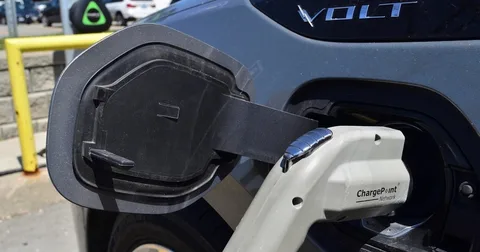
When you buy an EV (electric vehicle) in Chiba Prefecture, where do the subsidies come from, and how much can you get? The conclusion: for the 2026 fiscal year (Reiwa 8), Chiba is a two-tier structure of "no prefectural purchase subsidy for individuals; the national CEV subsidy (up to ¥1.3 million for an EV) plus municipal add-ons". Chiba City subsidizes, on a first-come, first-served basis, ¥100,000 for an EV or PHV on the condition that residential solar power is installed together (¥150,000 if V2H is also bundled), and up to ¥250,000 for V2H equipment. Funabashi City and others also have their own programs. A distinctive point is that the prefecture's subsidies are limited to small and medium enterprises and transport operators. This article organizes the 2026 fiscal year information from primary sources: how to use the national and municipal programs, points to note when applying, and the taxes on EVs.
Think of Chiba's EV subsidies as a "two-tier" structure
CEV subsidy (the lead role in purchases)
A national subsidy available to both individuals and corporations. The FY2025 supplementary-budget round (registrations from April 2026) offers the largest amounts, such as up to 1.3 million yen for EVs.
Independent add-ons such as Chiba City and Funabashi City
Availability and conditions differ by municipality. Chiba City offers ¥100,000 for an EV with solar power installed together, etc. The basic approach is to stack it on the national subsidy.
No prefectural subsidy for individuals
Chiba Prefecture's Reiwa 8 fiscal year subsidies are only for small and medium enterprises and regional transport operators. Individuals build their plan with national + municipal.
[National] CEV Subsidy under the FY2025 Supplementary Budget (registrations from April 2026; the main pillar)
"Up to ¥1.3 million" is a cap. The subsidy amount is decided for each vehicle type by an evaluation of the vehicle's environmental performance and the like. Applications close once the budget runs out. On September 4 the secretariat announced that it expects to stop accepting applications around early to late December 2026 (applications are taken in order of arrival, and intake ends the day before the budget is reached; secretariat notice, PDF, in Japanese). A subsidized vehicle carries a mandatory holding period of, in principle, 4 years; if you dispose of it within the period, repayment may be required. Check the exact subsidy amount for the car you are buying against the figures published by the Next Generation Vehicle Promotion Center.
The overall picture of the CEV subsidy and the nationwide situation is explained in our guide to EV subsidies in all 47 prefectures.
[Chiba Prefecture] No prefectural subsidy for individuals (there is one for businesses)
Chiba Prefecture's next-generation vehicle subsidies for the Reiwa 8 fiscal year consist of two programs: the "Next-Generation Vehicle Equipment Subsidy" for small and medium enterprises and the "Next-Generation Vehicle Introduction Promotion Subsidy" for regional transport operators — both target businesses. There is no prefectural subsidy for individual purchases. Individuals do not need to "wait for a prefectural subsidy"; for the 2026 fiscal year, the right approach is to combine national + municipal.
Small and medium enterprises and sole proprietors introducing an EV, PHV, or FCV for business use in the prefecture may be able to use the prefecture's business-oriented subsidies, so check the call-for-applications status on the prefecture's official page. Note that neighboring Tokyo has generous subsidies for individuals (see the Tokyo EV subsidy guide), and Saitama Prefecture shows a similar picture — no prefectural subsidy, relying on municipalities (see Saitama EV subsidies 2026).
[Municipalities] Chiba City: ¥100,000 for an EV "bundled with solar power"
The distinctive point of Chiba City's Reiwa 8 fiscal year subsidy is that installing residential solar power together is a condition.
| Category | Subsidy amount | Main conditions |
|---|---|---|
| EV / PHV (with solar power installed together) | ¥100,000 | Bundled with residential solar power equipment |
| EV / PHV (with solar power + V2H installed together) | ¥150,000 | Bundled with both solar power and V2H |
| V2H charge/discharge equipment | Up to ¥250,000 (one-tenth of eligible expenses) | Requires a next-generation vehicle and solar power installed together |
- Eligible applicants: individual residents of Chiba City (corporations are not eligible)
- Application period: May 1, 2026 to January 29, 2027. First-come, first-served (a lottery is held if same-day applications exceed the budget)
- Note that "just buying the car" is not eligible. The program is designed to be considered as a set with home-side equipment plans including solar power and V2H
Beyond Chiba City, Funabashi City runs an EV/PHV purchase subsidy for the Reiwa 8 fiscal year, and municipal-level programs are scattered around. Search "your municipality's name + EV subsidy" and check the amounts, conditions, and remaining budget on the official site.
Check the "tax" on EVs too (reductions in automobile tax)
Apart from subsidies, the environmental performance levy of the automobile tax was abolished on March 31, 2026, and it is not charged on vehicles acquired on or after April 1, 2026 (Tokyo Metropolitan Government Bureau of Taxation, in Japanese). For EVs, the type-based levy of the automobile tax for the following fiscal year is reduced by roughly 75% under the greening special provision. Details are explained in EV taxes and the 2026 automobile tax reform.
Is a subsidy taxed?
An EV subsidy an individual receives is treated as occasional income. There is an annual special deduction of ¥500,000, so it is not taxed if, combined with other occasional income, it stays within ¥500,000 a year. The national and city subsidies combined usually stay within it, but be careful about the total in a year when you receive multiple large subsidies. Business use is treated differently — consult a tax accountant or the like.
What to do today
What to do today
- Check the national CEV subsidy amount for your candidate vehicle in the Next Generation Vehicle Promotion Center's list (your own car's amount, not "up to ¥1.3 million")
- Search "EV subsidy" on your municipality's official site and check the conditions (for Chiba City, solar power installed together) and the remaining budget
- If you are also considering installing solar power or V2H, build the application schedules for the car and the home equipment as a set
FAQ
Q. Does Chiba Prefecture have no EV subsidy for individuals?
A. For the Reiwa 8 fiscal year, Chiba Prefecture's subsidies are only for small and medium enterprises and regional transport operators; there is none for individual purchases. Individuals combine the national CEV subsidy with municipal subsidies such as those of Chiba City and Funabashi City.
Q. Can you get Chiba City's subsidy without solar power?
A. No. Chiba City's Reiwa 8 fiscal year subsidy requires residential solar power installed together, and buying an EV or PHV on its own is not eligible. Bundling solar power + V2H increases the amount to ¥150,000.
Q. Can the national CEV subsidy and Chiba City's subsidy be combined?
A. Chiba City's guidance contains no provision prohibiting the combination, and national and municipal subsidies can generally be combined. To be safe, confirm with the city's contact desk before applying.
Q. Are there subsidies for business-use EVs?
A. Yes. Chiba Prefecture runs a next-generation vehicle equipment subsidy for small and medium enterprises, and the national CEV subsidy is also available to corporations and businesses. Check the application periods and requirements on the prefecture's official page.
Reference links (sources)
* Subsidy amounts, requirements, and application status are as of August 2026. Programs may end early depending on budget consumption. Always check the latest information on each official site before applying.